Delhi Metro Expansion Gets Green Light
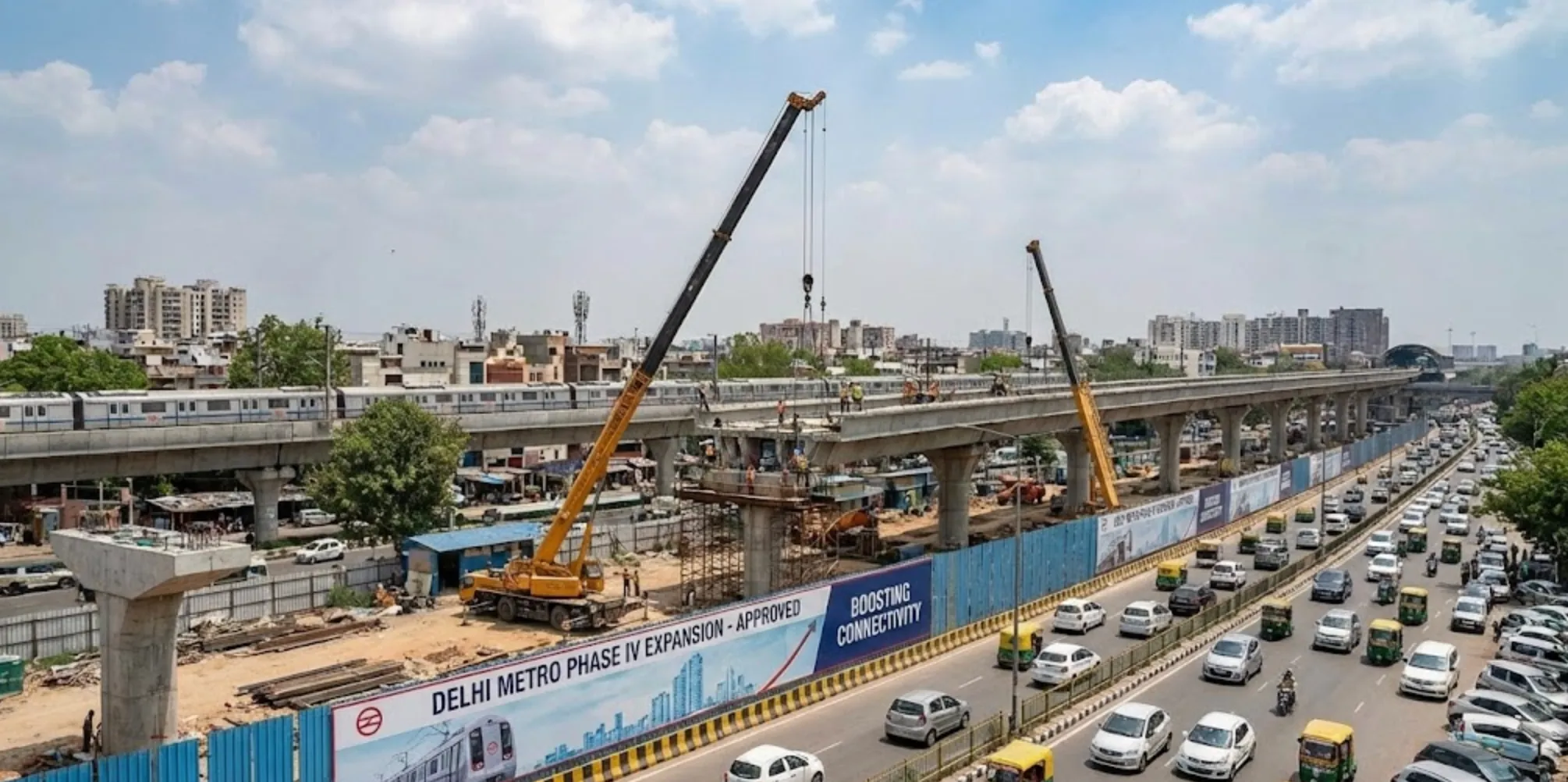
The Delhi government has approved funding for the remaining three corridors of Phase IV of the Delhi Metro Rail Transit System (MRTS). This decision aims to expand the city's metro network, improve connectivity, and reduce traffic congestion and pollution. The project is expected to be completed within four years.
Key Aspects of the Expansion
- Total Cost and Funding: The expansion project is estimated to cost Rs 14,630.80 crore, with the Delhi Government contributing Rs 3,386.18 crore.
- Combined Length: The three corridors will have a combined length of 47.225 kilometers.
- Corridors:
- Lajpat Nagar to Saket G Block: This corridor will be 8.385 km long with eight elevated stations.
- Inderlok to Indraprastha: This corridor will be 12.377 km long and include ten stations, one elevated and nine underground.
- Rithala to Kundli: The longest of the three, this corridor will be 26.463 km long and have 21 stations, extending the Metro services to Kundli in Haryana. The Delhi government will contribute Rs 1,398.32 crore, with Rs 5,685.22 crore allocated for works in Delhi and Rs 545.77 crore for Haryana.
Corridor Connectivity
The new corridors are expected to improve access to several areas.
- The Lajpat Nagar-Saket G Block line will serve areas including Lajpat Nagar, Andrews Ganj, Greater Kailash-1, Chirag Delhi, Pushp Bhawan, Saket District Centre, and Pushp Vihar.
- The Inderlok-Indraprastha corridor will connect Inderlok, Dayabasti, Sarai Rohilla, Ajmal Khan Park, Jhandewalan, Nabi Karim, New Delhi Railway Station, Delhi Gate, and the Delhi Secretariat-IG Stadium area.
- The Rithala-Kundli corridor will pass through multiple sectors of Rohini, Bawana Industrial Area, Narela, and adjoining regions before reaching Kundli and Nathupur in Haryana.
Expected Benefits
The Chief Minister stated that the metro expansion will ease congestion and reduce pollution, making Delhi more modern. The expansion is intended to provide safe, convenient, and time-efficient travel, reducing dependence on private vehicles and helping control pollution.
Current Metro Network
The Delhi Metro currently spans over 352 km with 257 stations across ten lines.
Conclusion
The Delhi government's approval of funds for the three remaining corridors in Phase IV aims to significantly expand the metro network. The project is projected to enhance connectivity, reduce traffic, and decrease pollution levels in Delhi and surrounding areas.