India's Evolving Relations with Israel and Palestine
India's relationship with both Israel and Palestine has undergone significant changes over the decades. While historically a strong supporter of the Palestinian cause, India has also fostered increasingly close ties with Israel, particularly since the early 1990s. This shift reflects a complex interplay of strategic interests, economic considerations, and evolving geopolitical realities.
Historical Support for Palestine
In the post-colonial era, India was a staunch advocate for Palestinian independence. India recognized the Palestine Liberation Organization (PLO) in 1974 as the sole legitimate representative of the Palestinian people, becoming the first non-Arab state to do so. In 1988, India was among the first countries to recognize the State of Palestine. This support was rooted in anti-colonial solidarity and a commitment to the Non-Aligned Movement. India also supported UN resolutions backing Palestinian self-determination.
Growing Ties with Israel
Despite initial opposition to the United Nations Partition Plan for Palestine in 1947, India recognized Israel's sovereignty in 1950. Full diplomatic relations were established in 1992, with the opening of embassies in both countries. Since then, the relationship has deepened, particularly in the areas of defense, agriculture, and technology. Israel has been a key supplier of arms and ammunition to India, including during the Indo-Pakistani Wars.
Strategic and Economic Interests
India's growing ties with Israel are driven by strategic and economic interests. Both countries face similar security threats, and India has purchased significant amounts of Israeli arms. Bilateral trade has increased significantly, and a potential free trade agreement could further boost economic ties.
Recent Developments
Prime Minister Narendra Modi's visit to Israel in 2017 was the first by an Indian Prime Minister and marked a further strengthening of relations. India and Israel are also partners in multilateral initiatives such as the I2U2 grouping. In December 2025, India and Israel adopted a Joint Work Plan for 2026, expanding cooperation across various sectors.
Balancing Relations
Despite closer ties with Israel, India continues to maintain its support for a two-state solution to the Israeli-Palestinian conflict. India has provided aid and assistance to Palestine and supports Palestinian aspirations for statehood. However, some analysts suggest that India's growing relationship with Israel has come at the expense of its traditional support for Palestine.
Conclusion
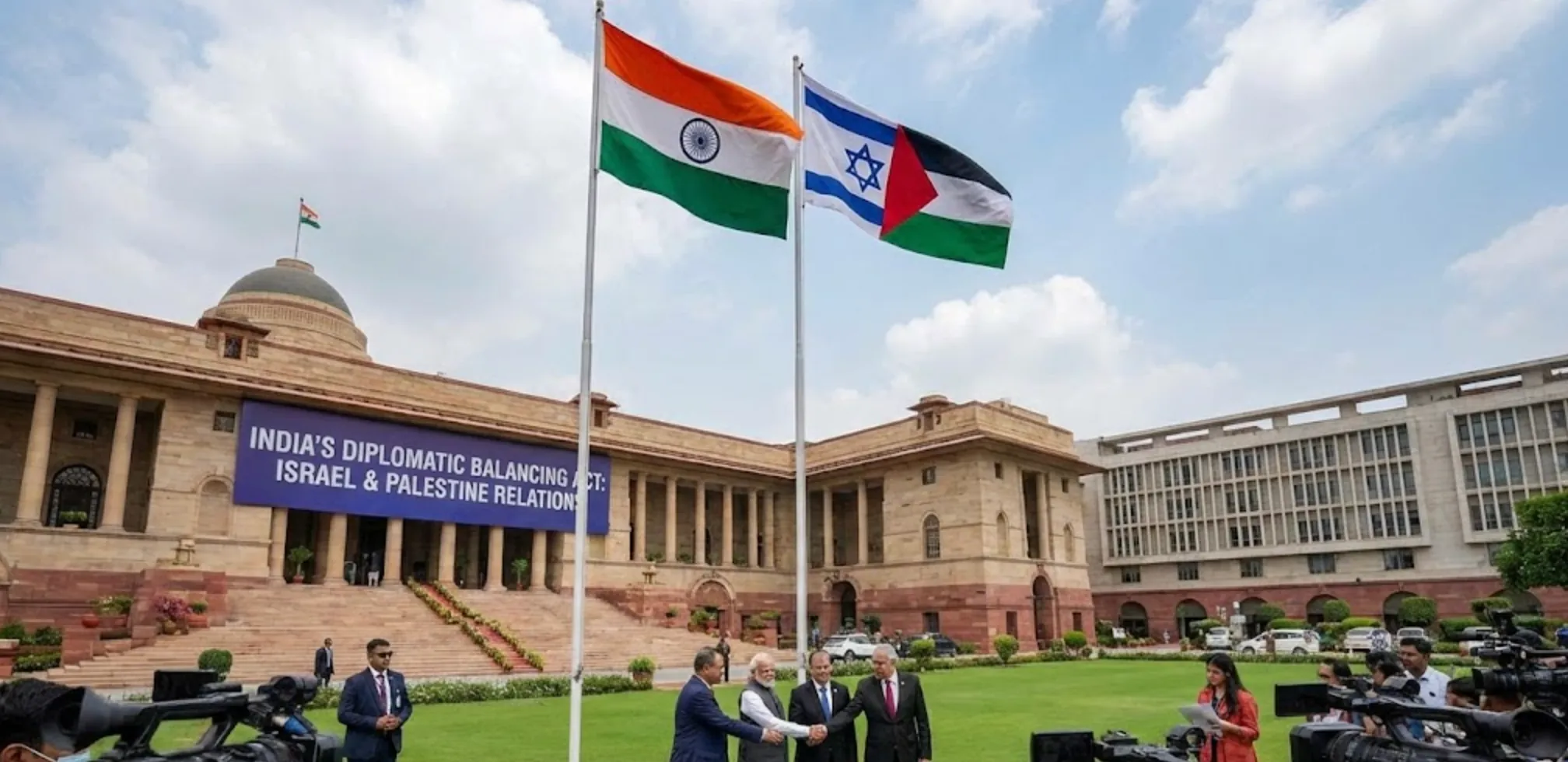
India's relationship with Israel and Palestine reflects a balancing act between historical solidarity, strategic interests, and evolving geopolitical realities. While India has deepened its ties with Israel in recent years, it continues to affirm its support for the Palestinian cause. The future trajectory of these relationships will likely be shaped by regional dynamics and India's own foreign policy priorities.