
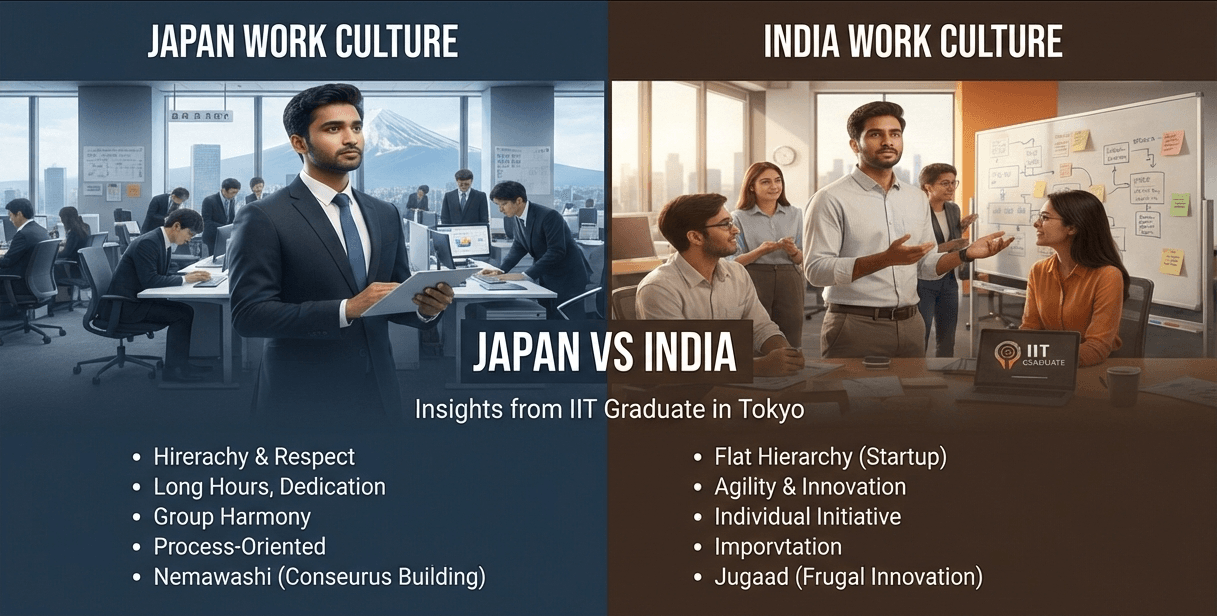
IIT Graduate in Tokyo Discusses Work Culture Differences
An IIT Hyderabad graduate working as a project manager in Tokyo has shared insights into the Japanese work culture, highlighting key differences from India.
Japanese Work Culture
Japanese work culture is known for its emphasis on harmony, loyalty, discipline, and strong work ethic. Punctuality and commitment are highly valued, with employees often arriving 15 minutes early and prioritizing work. There is a strong expectation of teamwork and respect for seniority. While traditionally known for long working hours, there's a shift towards improved work-life balance, driven by government initiatives and changing societal attitudes. Some companies are taking steps to reduce overwork, such as turning off office lights.
Key Aspects of Japanese Work Culture
- Strong Work Ethic: Punctuality and commitment are paramount.
- Hierarchy and Respect: Seniority is highly valued, and formal language is often used.
- Teamwork: Collaboration and group harmony are essential.
- Work-Life Balance: Efforts are being made to reduce long hours and promote well-being.
- Lifetime Employment: While less common now, the emphasis on loyalty and long-term relationships remains.
Indian Work Culture
Indian work culture blends tradition and modernity, valuing hierarchy, teamwork, and strong relationships. Respect for authority, seniority, and a sense of community are important. While teamwork is emphasized, a strong sense of hierarchy often prevails. Modern trends include the growth of startup culture and hybrid work models, but challenges like long hours and burnout persist.
Key Aspects of Indian Work Culture
- Hierarchy: Seniority and authority play key roles in decision-making.
- Teamwork: Collaboration and strong interpersonal relationships are crucial.
- Adaptability: Flexibility and resilience are valued.
- Long Hours: Overwork and burnout are challenges in the modern Indian workplace.
- Diversity: The workplace is a blend of cultures, languages, and traditions.
Contrasting Perspectives
Some sources suggest that Japan's work culture is more demanding than India's, while others suggest the opposite. Some reports indicate India has one of the most overworked labor forces, even compared to Japan. An Indian software engineer working in Japan highlighted not having to respond after work hours as a positive aspect of Japanese work culture.
Conclusion
Both Japanese and Indian work cultures have unique characteristics. Japan emphasizes harmony, loyalty, and a strong work ethic, while India blends tradition and modernity with a focus on hierarchy and relationships. While both countries face challenges related to work-life balance, understanding these cultural nuances is crucial for professionals in today's globalized workforce.