Supreme Court Blocks Trump Tariffs
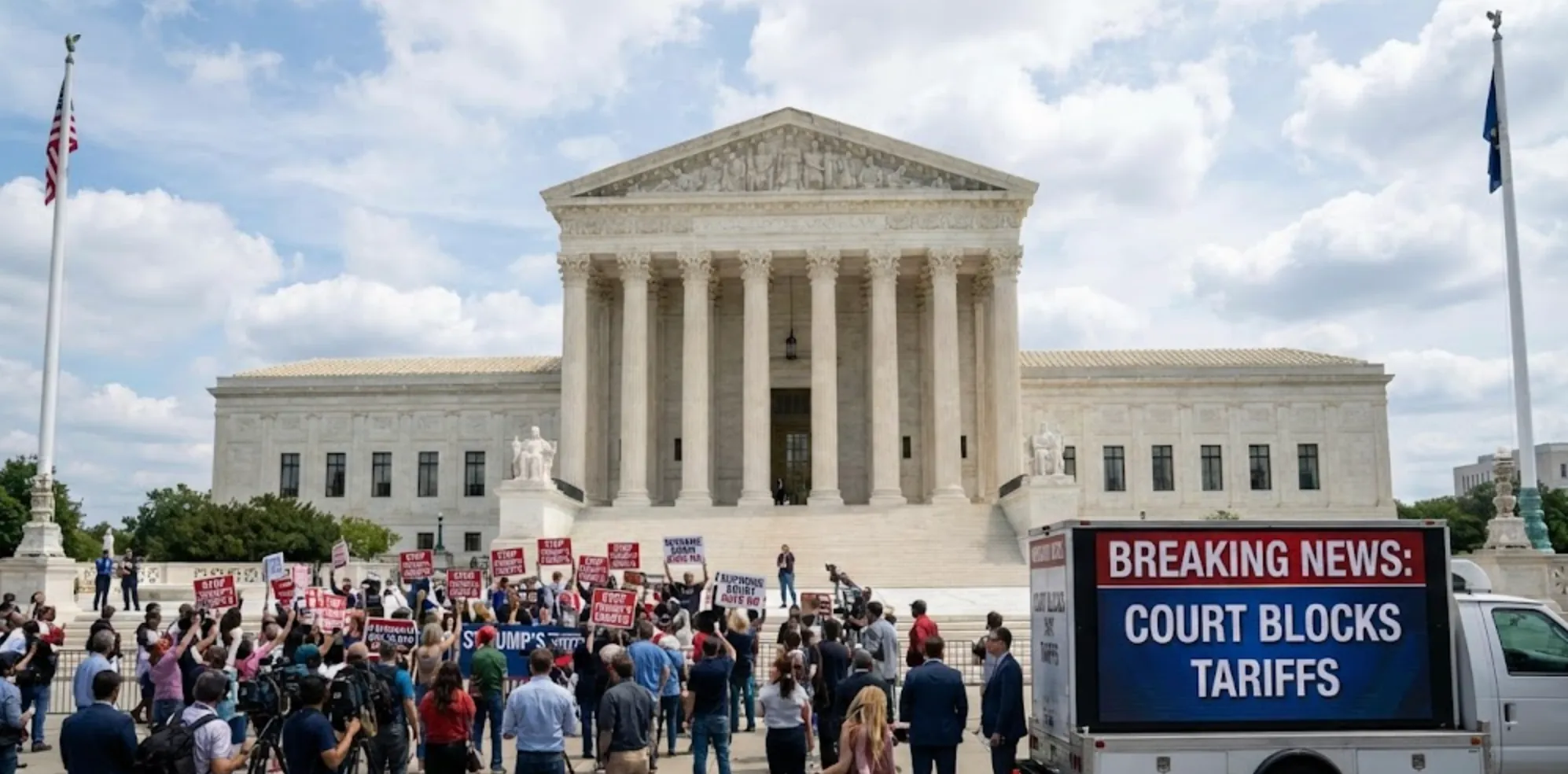
The US Supreme Court has struck down President Donald Trump's tariffs that were imposed on nearly all US trading partners. The court's 6-3 ruling stated that Trump's ability to unilaterally impose tariffs exceeded his powers under a decades-old law. The ruling blocks Trump's ability to use tariffs under the International Emergency Economic Powers Act (IEEPA) to extract concessions from trading partners.
Chief Justice John Roberts wrote that the Constitution did not vest any part of the taxing power in the executive branch. The Supreme Court's decision affects Trump's tariffs on Mexico, Canada, and China, where he cited an economic emergency due to the countries' alleged inaction in stopping the flow of fentanyl drugs into the US. The ruling also strikes down Trump's tariffs of 10% and higher since April 5, 2025, on nearly every US trading partner to address the economic emergency of persistent US trade deficits.
The decision will not affect tariffs on US imports of steel, aluminum, cars, and auto parts, which Trump imposed by citing well-tested legal trade authorities.
Alternative Legal Routes
Although the US Supreme Court has struck down President Donald Trump's controversial tariffs, several alternative legal mechanisms remain available that could allow similar trade duties to be reintroduced. One option is Section 232 of the Trade Expansion Act of 1962, which authorizes tariffs on imports deemed to threaten national security following a Commerce Department investigation. Another pathway is Section 301 of the Trade Act of 1974, which permits the US Trade Representative to investigate unfair trade practices and impose retaliatory tariffs.
Trump's Response
In a White House press conference, Trump revealed that he would impose an additional 10 percent global levy while keeping the remaining ones in place. The new tariffs will begin in three days, according to the president.
Conclusion
The Supreme Court has ruled that President Trump's sweeping tariffs were an overreach of executive power. While the ruling has implications for countries affected by the tariffs, alternative legal routes exist for the administration to pursue trade restrictions. Trump has stated his intention to keep tariffs in place using a different law.